
This week I had the pleasure of appearing on Doug Henwood’s political economy radio show, the LBO news. He picked my brain about the recent developments in the field of development economics and the work of Banerjee, Duflo and Kremer, in particular. This is a one-hour episode, with René Rojas being interviewed by the political demonstrations in Chile in the first half, and me being interviewed in the second half. You can download the podcast here or listen to it by pressing the play button below.
Category: Economic Development

I recently wrote this opinion piece for openDemocracy on the work of this year’s winners of the Sveriges Riksbank Prize in Economic Sciences in Memory of Alfred Nobel. The so-called Nobel went to Abhijit Banerjee, Esther Duflo and Michael Kremer, for promoting an experimental approach to alleviating global poverty.
The piece was also re-published by the URPE blog, The Mint, the Kashmir Times, Momentum Institut (in German), and Disparada (in Portuguese), and was covered by several newspapers, including by the Argentinian business newspaper La Nacion (Con el Nobel a los “randomistas”,la grieta llegó al ámbito académico) and the French daily newspaper Libération (L’extinction expérimentale et aléatoire du paupérisme).
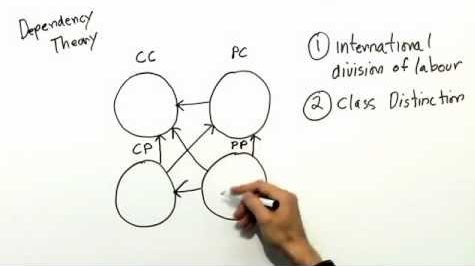
In this article in The Mint, I explore the relevance of dependency theory/ies today, along with Farwa Sial and Carolina Alves. We also identify some common critiques of dependency theory and argue that these are rooted in misunderstandings about the theories.
On February 9th 2019, I presented on a panel with Desmond McNeill (Centre for Development and Environment, University of Oslo) and Morten Jerven (Norwegian University of Life Sciences). I presented specifically on the politics of GDP measurement (based on this recent working paper I co-authored with Jacob Assa). The panel was a part of the Rethinking Sustainability conference organized by Rethinking Economics, Norway. My slides can be found here. [Note: the video is in Norwegian]
Categories
Short videos on development
The Interdisciplinary Global Development Centre (IGDC) recently filmed a snippet about one of my current research projects (with my colleague Collin Constantine). Check it out below.
In June 2018, the Interdisciplinary Global Development Centre was launched (my new employer). During the launch, I held a presentation of my project “Heterodox Development Economics” and gave some remarks. See the promo video from the event below.
You can read more about the launch here and about the Heterodox Development Economics project here.

Paulo dos Santos and I recently published a piece in Policy in Focus 14 (2): 55-57. This is a publication by The International Policy Centre for Inclusive Growth. You can also read the piece on Developing Economics.

An e-book I co-edited on dependency theory was recently published on the Institute for New Economic Thinking’s (INET) website. The e-book is the first volume of the e-book series Dialogues on Development and it includes 13 interviews with prominent scholars who have differing views on dependency theory.
Read about the e-book on INET’s website.
Download individual chapters (interviewees in brackets):
- Preface by Professor Jimi Adesina, College of Graduate Studies, University of South Africa
- Introduction: Why Should We Discuss Dependency Theory Today? By Ushehwedu Kufakurinani, Ingrid Harvold Kvangraven, Frutuoso Santanta, and Maria Dyveke Styve
- Chapter 1: A Dependency Pioneer (Samir Amin)
- Chapter 2: Dependency Theory and Its Enduring Relevance (Adebayo O. Olukoshi)
- Chapter 3: The Relevance of Dependent Development Then and Now (Peter Evans)
- Chapter 4: Whither Dependency Theory (Sabelo Ndlovu-Gatsheni)
- Chapter 5: The Caribbean Plantation Economy and Dependency Theory (Rex McKenzie)
- Chapter 6 – A Theoretical Revolution in Time and Space (Ramón Grosfoguel)
- Chapter 7: The Informal Empire of London (Andy Higginbottom)
- Chapter 8: The Political Economy of Africa and Dependency Theory (Patrick Bond)
- Chapter 9: Dependency Theory Today (Miguel Angel Centeno)
- Chapter 10: The More Things Change, the More They Stay the Same (Ian Taylor)
- Chapter 11: Dependency Theory Is Alive in Different Guises (Matías Vernengo)
- Chapter 12: Dependency Theory and Chinese Special Economic Zones in Africa (Honita Cowaloosur)
- Chapter 13: Varieties of Dependence in Europe (László Bruszt)
 Ingrid's website